Villa Nai 3.3 – Luxury Immersed in Nature
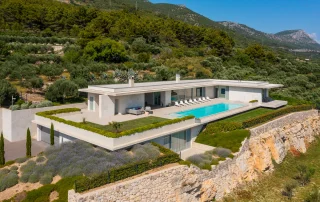
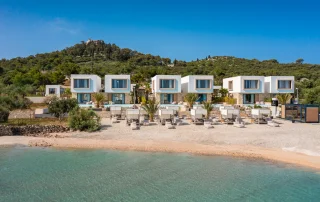
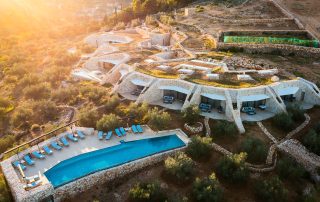
Villa Nai 3.3 is one of those rare projects where the architecture does half the storytelling for you. Designed by Nikola Bašić – the Croatian architect behind Zadar’s famous Sea Organ and the Greeting to the Sun – the hotel is literally carved into a hillside on Dugi Otok, a remote island in the Zadar archipelago.
Architecture born from the landscape
The S-shaped building follows the natural contours of the terrain, and what makes it truly special is that the stone walls throughout the resort were built from the very rock excavated from the hill during construction. From the outside, only the glass surfaces give away that there is a building here at all. Everything else blends into the surroundings and the olive grove of more than a thousand trees, some of them 500 years old.
A building shaped by light
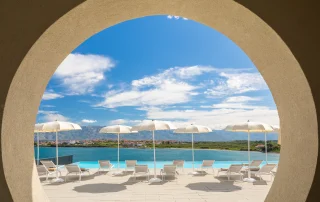
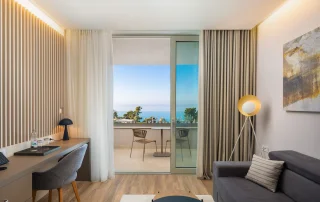
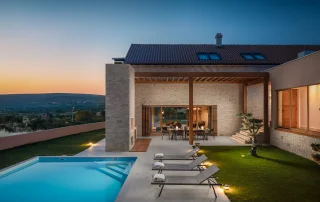
Photographing Villa Nai 3.3 meant following the way the architecture changes through light. The stone façade and walls take on a completely different expression as the sun and shadows move, while at dawn the infinity pool mirrors the sea and the islands. The interiors, furnished with Giorgetti pieces, natural materials, and sculptural ceilings, work beautifully with the daylight that enters through floor-to-ceiling glass walls. Every room looks either toward the sea or the olive groves, so throughout the day the light had to be followed carefully to capture each space at its best. The spa, tucked inside with its mosaic pool and sauna, offered a completely different atmosphere – intimate, almost cave-like.
A hotel in tune with the island
Dugi Otok is one of those places that still feels untouched – no crowds, no noise, just open sea and stone. The hotel fits that energy perfectly. Michelin listed it among the top five best-designed hotels globally, the only European property on that list. It’s a member of The Leading Hotels of the World, and the name itself comes from Nai 3.3, an award-winning olive oil produced on the estate by the Morović family, who own the property. For me as a photographer, it was a project where architecture, landscape, and light complemented each other perfectly – and a real pleasure to spend several days there photographing it.
Other projects
Villa Nai 3.3 – Luxury Immersed in Nature
Five Elements Luxury Rooms – Designer Interiors in Split
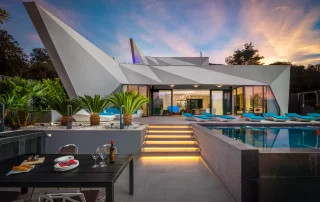
Villa Diamond – A Statement Villa on Korčula Island
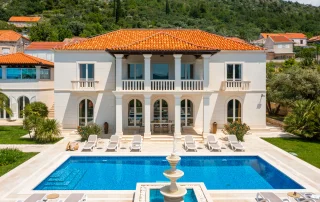
La Villa Dubrovnik – A Mediterranean Estate in Trsteno